SEO, SEM and Digital Marketing: How They Work Together
Being visible online is essential for businesses that want to reach new customers and build lasting relationships. Search engine optimisation (SEO), search engine marketing (SEM) and digital marketing all play a part in that effort. Although the terms are connected, they describe different activities. Understanding how they fit together can help businesses make better decisions about where to invest their time and budget.
What is digital marketing?
Digital marketing is the broad practice of promoting a business, product or service through online channels. It can include a company website, search engines, social media, email, online advertising and digital content.
A digital marketing strategy brings these channels together around clear business goals. For example, a business might use useful website content to attract visitors, social media to build awareness, email to nurture prospective customers and online advertising to reach people searching for a particular service.
The right mix depends on the audience, the organisation’s goals and the resources available. Digital marketing is not simply about being present on every platform; it is about choosing the channels that are most likely to reach the right people.
What is SEO?
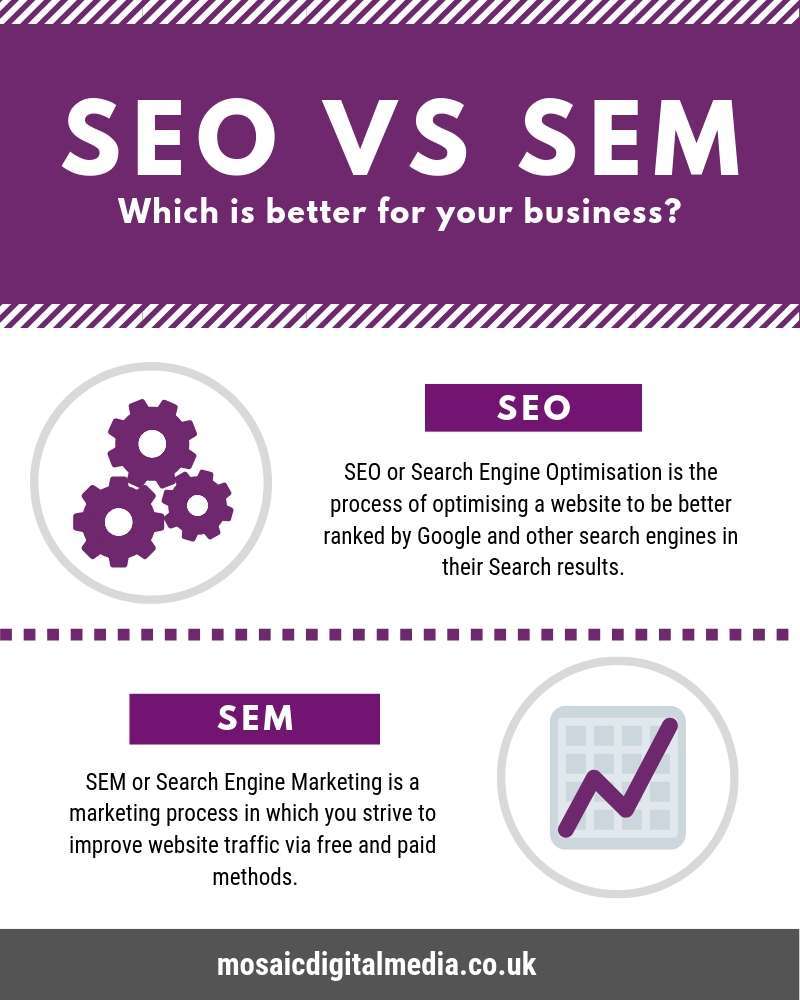
SEO, or search engine optimisation, is the process of improving a website so that it can be found more easily in the unpaid results on search engines. It involves understanding what people are looking for and making a website useful, accessible and easy for search engines to interpret.
SEO commonly includes:
- Keyword and audience research: Learning how people describe their needs and what information they expect to find.
- Content optimisation: Creating clear, helpful pages that answer relevant questions.
- Technical SEO: Improving factors such as site speed, mobile usability, security and crawlability.
- On-page optimisation: Organising page titles, headings, links and other elements so that the content is clear to visitors and search engines.
- Authority and reputation: Earning credible mentions and links from other relevant websites.
SEO is generally a long-term activity. Results can take time, and rankings cannot be guaranteed. However, a well-maintained website can continue attracting relevant visitors without paying for every individual click.
What is SEM?
SEM stands for search engine marketing. The term can be used broadly to describe marketing through search engines, including both organic SEO and paid search advertising. In everyday business use, it is also often used to mean paid search campaigns, such as adverts shown on search engine results pages.
Paid search allows a business to bid to show adverts for selected searches or audiences. Depending on the platform and campaign, the business may pay when someone clicks an advert or when another agreed action takes place. Paid campaigns can provide visibility quickly, but performance depends on factors including competition, targeting, advert quality and landing-page experience.
Unlike SEO, paid search usually stops generating paid visibility when the campaign budget is paused. It can nevertheless be useful for promoting a new service, testing demand or reaching people with a clear intention to buy.
SEO and paid search: different roles, shared insights
SEO and paid search are not rivals. They can support one another as part of a wider digital marketing plan. SEO can build long-term organic visibility, while paid search can help a business appear for selected searches more quickly.
Data from paid campaigns may reveal which search terms attract relevant visitors or lead to enquiries. Those insights can inform future website content. In turn, strong organic pages can provide useful destinations for advertising campaigns. Looking at both channels together also gives businesses a fuller view of how customers discover and research their products or services.
Building an effective strategy
A practical SEO and SEM strategy starts with clear objectives. A business should decide whether it wants to increase brand awareness, generate qualified enquiries, sell products or encourage another specific action. It can then identify its audience, understand their search habits and choose suitable channels.
Each campaign should lead to a relevant, helpful page. A well-written advert or a high search ranking is less valuable if visitors cannot quickly find the information they need. Pages should explain the offer clearly, work well on mobile devices and make the next step straightforward.
It is also important to measure more than traffic. Useful measures may include qualified leads, sales, conversion rate, cost per acquisition and the value of customers over time. Regularly reviewing results helps businesses identify what is working and make considered improvements.
A connected approach to online growth
SEO, SEM and digital marketing each have a distinct role, but their greatest value often comes when they are planned together. SEO can build a strong foundation for long-term discovery, paid search can provide targeted visibility, and other digital channels can help develop relationships with potential customers.
By focusing on useful content, a positive website experience and meaningful results, businesses can create a digital marketing approach that serves both their audience and their wider goals.
Maximising Online Presence: Five Key Benefits of SEO and SEM in Digital Marketing
- Boosts visibility in search results.
- Attracts relevant website visitors.
- SEO can deliver lasting organic traffic.
- SEM provides fast, targeted exposure.
- Performance is measurable and adjustable.
Seven Challenges of SEO and SEM in Digital Marketing
- SEO can take months to show results.
- Paid search costs can rise quickly.
- Competitive keywords are expensive.
- Search engine algorithms can change.
- Traffic does not guarantee sales.
- Poor targeting can waste budget.
- Results need ongoing monitoring.
Boosts visibility in search results.
SEO and SEM digital marketing can boost a business’s visibility in search results, helping it reach people who are actively looking for relevant products, services or information. SEO can improve a website’s presence in unpaid listings over time, while paid search adverts can provide targeted visibility more quickly. Used together, they can help a business appear in more places on the search results page and attract a wider audience.
Attracts relevant website visitors.
SEO and SEM digital marketing help attract relevant website visitors by connecting your business with people who are already searching for the products, services or information you offer. SEO can improve your visibility in organic search results, while paid search campaigns can target specific keywords, locations and audiences. This makes it more likely that visitors arriving on your website are genuinely interested in what you provide.
SEO can deliver lasting organic traffic.
One of the key benefits of SEO is its ability to deliver lasting organic traffic. By creating useful content and improving a website’s visibility in search results, businesses can continue attracting relevant visitors over time without paying for every click. Although SEO takes patience and regular upkeep, strong rankings can provide a steady source of traffic long after the initial work is complete.
SEM provides fast, targeted exposure.
SEM can provide fast, targeted exposure by placing paid adverts in front of people searching for specific products, services or solutions. Businesses can tailor campaigns by location, audience and search terms, helping them reach relevant potential customers quickly. Unlike SEO, which often takes time to build organic visibility, SEM can start driving visits as soon as a campaign goes live.
Performance is measurable and adjustable.
A key advantage of SEO, SEM and digital marketing is that performance can be measured and adjusted over time. Analytics tools help businesses track activity such as website visits, search rankings, advert clicks, enquiries and sales, showing which efforts are delivering results. These insights make it easier to refine content, targeting and budgets, so marketing activity can respond to audience behaviour and changing business goals.
SEO can take months to show results.
One drawback of SEO is that it can take months to produce noticeable results. Search engines need time to discover and assess changes to a website, while competitive search terms may require sustained effort before a page gains visibility. This can make SEO less suitable for businesses seeking immediate traffic or sales, so it is often combined with paid search advertising, which can deliver visibility more quickly.
Paid search costs can rise quickly.
Paid search can deliver quick visibility, but costs can rise quickly, particularly in competitive industries where businesses bid against one another for the same keywords. If campaigns are not carefully targeted and regularly reviewed, a large budget may be spent on clicks that do not lead to enquiries or sales. Setting clear spending limits, monitoring performance and refining keywords and adverts can help keep costs under control.
Competitive keywords are expensive.
Competitive keywords can be expensive to target, particularly in paid search campaigns where many businesses bid for the same terms. This can drive up the cost per click and make it harder for smaller organisations to compete, especially if those clicks do not lead to sales or enquiries. Organic SEO can also require significant investment in high-quality content and ongoing optimisation to gain visibility for popular searches, with no guarantee of reaching the top results. Careful keyword research, realistic budgeting and a focus on more specific search terms can help businesses manage these costs.
Search engine algorithms can change.
Search engine algorithms can change without warning, which may affect a website’s rankings and reduce the traffic it receives from organic search. Businesses that rely heavily on SEO or search engine marketing may need to adapt their content, technical setup and campaigns as platforms update how results are ranked or displayed. This uncertainty makes it important to monitor performance regularly and avoid depending on a single digital marketing channel.
Traffic does not guarantee sales.
One drawback of SEO and SEM is that increased website traffic does not automatically lead to more sales. Visitors may arrive with different needs, limited budgets or little intention to buy, while a confusing website, irrelevant landing page or complicated checkout can prevent interested prospects from converting. For this reason, businesses should focus not only on attracting visitors but also on reaching the right audience and providing a clear, trustworthy path from search to purchase.
Poor targeting can waste budget.
Poor targeting can waste budget in SEO, SEM and digital marketing. If campaigns focus on the wrong keywords, audiences or locations, they may attract people who are unlikely to become customers. This can lead to irrelevant website visits, wasted advertising spend and disappointing results. Careful audience research, clear campaign settings and regular performance reviews help ensure marketing efforts reach people who are more likely to be interested in the offer.
Results need ongoing monitoring.
One drawback of SEO and SEM is that results need ongoing monitoring. Search algorithms, competitors, audience behaviour and advertising costs can all change, so a strategy that works today may be less effective tomorrow. Businesses need to regularly review performance data, check rankings and campaign spend, and adjust their content, targeting or budget accordingly. This takes time and expertise, and without consistent oversight, opportunities may be missed or resources spent on underperforming activities.