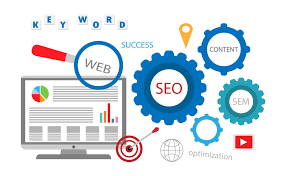
The Role of Search Engine Marketing (SEM) in Digital Marketing
In the ever-evolving landscape of digital marketing, Search Engine Marketing (SEM) plays a crucial role in helping businesses reach their target audience and drive valuable traffic to their websites. SEM encompasses various strategies aimed at increasing a website’s visibility on search engine results pages through paid advertising.
Understanding SEM
SEM involves the use of paid search advertising to promote a website by increasing its visibility on search engine results pages. This is typically achieved through pay-per-click (PPC) campaigns, where advertisers bid on keywords relevant to their target audience. When users search for these keywords, the ads appear at the top or bottom of the search results, driving targeted traffic to the website.
Benefits of SEM
One of the key advantages of SEM is its ability to deliver immediate results. Unlike organic search engine optimisation (SEO), which can take time to show significant results, SEM allows businesses to quickly reach potential customers and generate leads. Additionally, SEM provides precise targeting options, allowing advertisers to tailor their campaigns based on factors such as location, device, and demographics.
Components of SEM
SEM comprises several components that work together to create effective paid advertising campaigns. These include keyword research to identify relevant search terms, ad creation with compelling copy and visuals, bid management to optimise campaign performance, and tracking and analytics to measure the success of the campaigns.
Integration with Other Digital Marketing Strategies
SEM is often integrated with other digital marketing strategies such as SEO, social media marketing, and content marketing to create a comprehensive online presence. By combining these strategies, businesses can maximise their reach and engagement with their target audience across various online channels.
Conclusion
In conclusion, Search Engine Marketing (SEM) is a powerful tool in the digital marketer’s arsenal for driving targeted traffic and achieving specific business objectives. By leveraging SEM effectively alongside other digital marketing strategies, businesses can enhance their online visibility, attract qualified leads, and ultimately boost their bottom line.
Top 5 Tips for Effective SEM Strategies in Digital Marketing
- Use relevant keywords in your ad copy to improve ad relevance and click-through rates.
- Regularly review and update your negative keyword list to prevent irrelevant clicks and wasted budget.
- Test different ad copy variations to identify the most effective messaging for your target audience.
- Optimise landing pages for a seamless user experience and higher conversion rates.
- Monitor performance metrics such as CTR, conversion rate, and ROI to make data-driven decisions for campaign optimisation.
Use relevant keywords in your ad copy to improve ad relevance and click-through rates.
To enhance the effectiveness of your Search Engine Marketing (SEM) campaigns, it is essential to incorporate relevant keywords into your ad copy. By aligning your ad content with the search terms that users are actively looking for, you can boost ad relevance and increase click-through rates. Utilising specific and targeted keywords in your ad copy not only improves the chances of your ads being displayed to the right audience but also entices users to click on them, leading to higher engagement and better campaign performance. Remember, relevance is key in SEM, so make sure to craft compelling ad copy that resonates with your target audience’s search intent.
Regularly review and update your negative keyword list to prevent irrelevant clicks and wasted budget.
Regularly reviewing and updating your negative keyword list is a crucial tip in Search Engine Marketing (SEM) to ensure that your campaigns are targeting the right audience effectively. By actively managing your negative keywords, you can prevent irrelevant clicks and wasted budget on users who are unlikely to convert. This strategic approach not only improves the efficiency of your SEM campaigns but also helps maximise your return on investment by directing your budget towards high-quality leads that are more likely to result in conversions.
Test different ad copy variations to identify the most effective messaging for your target audience.
To enhance the effectiveness of your Search Engine Marketing (SEM) campaigns, it is essential to test different ad copy variations to pinpoint the most compelling messaging for your target audience. By experimenting with various ad copies, you can determine which messages resonate best with your audience and drive higher click-through rates and conversions. This iterative approach allows you to refine your advertising strategy based on real data and insights, ultimately leading to more successful SEM campaigns that deliver tangible results.
Optimise landing pages for a seamless user experience and higher conversion rates.
To maximise the effectiveness of your Search Engine Marketing (SEM) campaigns, it is essential to optimise your landing pages for a seamless user experience and higher conversion rates. A well-designed landing page that aligns with the ad’s messaging and offers relevant content can significantly impact user engagement and conversion rates. By ensuring that the landing page is visually appealing, easy to navigate, and provides clear calls-to-action, businesses can enhance the overall user experience and increase the likelihood of converting visitors into customers. Investing time and effort in optimising landing pages is a strategic approach to maximising the ROI of SEM campaigns and driving business growth.
Monitor performance metrics such as CTR, conversion rate, and ROI to make data-driven decisions for campaign optimisation.
Monitoring performance metrics such as Click-Through Rate (CTR), conversion rate, and Return on Investment (ROI) is essential in Search Engine Marketing (SEM) for making informed, data-driven decisions to optimise campaigns effectively. By analysing these key metrics, marketers can gain valuable insights into the performance of their ads and landing pages, identify areas for improvement, and make adjustments to enhance overall campaign effectiveness. Regularly tracking and evaluating these performance indicators allows for strategic decision-making that can lead to better targeting, improved ad copy, and ultimately higher returns on investment in SEM campaigns.